Intermediate First Aid provides comprehensive training covering
all aspects of first aid and CPR. Intermediate First Aid
incorporates all of Basic First Aid and is designed for those who
require a more in-depth understanding of first aid including: legal
implications of first aid treatment, spinal injuries, heat or cold
injuries, bone and joint injuries, chest injuries, and medical
emergencies. Includes CPR-C certification.
The first aid program is not restricted to aquatic candidates.
You can use the Lifesaving Society's first aid awards to train
non-aquatic staff (camp, playground, maintenance, etc.) and the
general public.
Prerequisite: None.
Instruction & certification: Current First
Aid Instructors teach Intermediate First Aid, but only current
Intermediate First Aid Examiners may certify candidates. The
Lifesaving Society deems its certifications to be "current" for 36
months from the certification date.
Candidate recognition: Certification card.
Required reference material: Canadian First
Aid Manual or Canadian Lifesaving Manual
:::
Recertification: Complete Intermediate
First Aid course.
at-a-glance
Intermediate First Aid includes the ten Basic First Aid items in addition to
the following:
- Demonstrate two-rescuer adult, child and infant cardiopulmonary
resuscitation on a manikin.
- Demonstrate the recognition and care of a victim with a
suspected spinal injury on land.
- Demonstrate the recognition and care of a victim suffering
from:
- heat cramps, heat exhaustion, and heat stroke
- hypothermia and frostbite
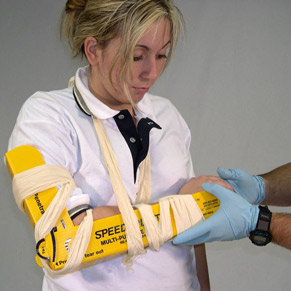
- Demonstrate the recognition and care of a bone or joint
injury.
- Demonstrate the recognition and care of a chest injury.
- Demonstrate the recognition and care of a head injury.
- :::
- Demonstrate the recognition and care of a seizure victim.
- Demonstrate the recognition and care of a diabetic
emergency.
- Demonstrate the recognition and care of a victim suffering from
suspected poisoning.
- Demonstrate an understanding of the effects of stress on
victims, rescuers, and bystanders, as well as the consequences of
an unsuccessful rescue.